The eruption of Anak Krakatau temporarily disrupted operations at Soekarno-Hatta International Airport on September 6, with flights suspended for several hours as volcanic ash affected the region.
During an airport closure, some areas may have little or no passenger activity while other sections still require access for airport employees, maintenance teams, emergency personnel, or authorized vehicles. This creates a simple perimeter challenge: which areas should remain accessible, and which should be secured?
Use Airport Fencing to Separate Restricted Areas
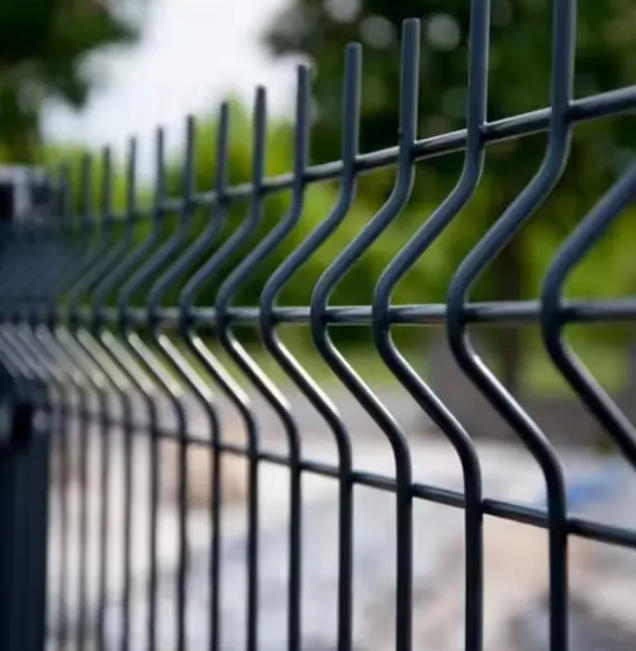
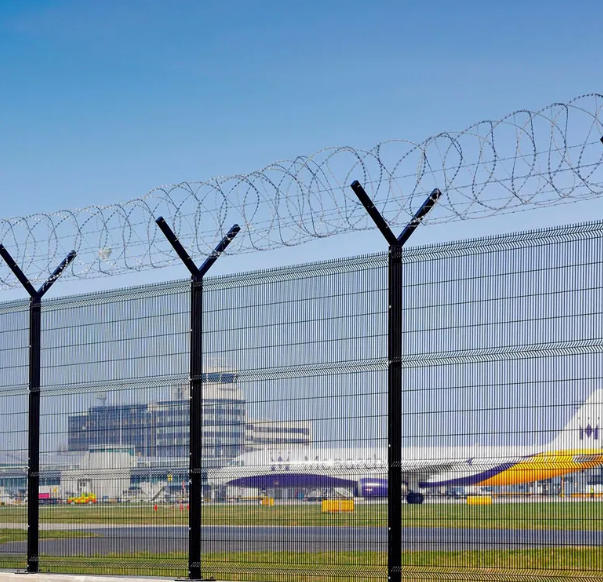
For temporarily restricted aircraft parking areas, maintenance zones, service facilities, or other controlled sections, rigid welded mesh airport fencing can create a clear physical boundary.
Welded panels are suitable for permanent perimeter systems and can be configured according to the required height and mesh opening. Their rigid structure also keeps the boundary clearly defined, which is useful when airport operations change between normal and restricted modes.
Match the Fence With the Access Gate
Restricted areas still need controlled entry. Airport employees and authorized vehicles may need to pass through the perimeter even when passenger operations are suspended.
This is where airport security gates become an important part of the fencing system.
Vehicle and pedestrian gates can be designed to match the surrounding fence, with dimensions and configurations adjusted to suit the access route.
Built Around the Airport's Actual Requirements
Emergency closures do not always affect an entire airport in the same way.
One section may be closed, another may continue supporting essential operations, and a third may require controlled vehicle access.
We can supply airport fencing and matching gates for these different requirements, including customized welded mesh panels, posts, pedestrian gates, and vehicle gates.
For airports reviewing their perimeter after an emergency, the approach is straightforward: identify the areas that need to be restricted, install suitable fencing around them, and provide controlled gates where authorized access must continue.
That keeps the perimeter organized even when airport operations temporarily change.
During an airport closure, some areas may have little or no passenger activity while other sections still require access for airport employees, maintenance teams, emergency personnel, or authorized vehicles. This creates a simple perimeter challenge: which areas should remain accessible, and which should be secured?
Use Airport Fencing to Separate Restricted Areas
For temporarily restricted aircraft parking areas, maintenance zones, service facilities, or other controlled sections, rigid welded mesh airport fencing can create a clear physical boundary.
Welded panels are suitable for permanent perimeter systems and can be configured according to the required height and mesh opening. Their rigid structure also keeps the boundary clearly defined, which is useful when airport operations change between normal and restricted modes.
Match the Fence With the Access Gate
Restricted areas still need controlled entry. Airport employees and authorized vehicles may need to pass through the perimeter even when passenger operations are suspended.
This is where airport security gates become an important part of the fencing system.
Vehicle and pedestrian gates can be designed to match the surrounding fence, with dimensions and configurations adjusted to suit the access route.
Built Around the Airport's Actual Requirements
Emergency closures do not always affect an entire airport in the same way.
One section may be closed, another may continue supporting essential operations, and a third may require controlled vehicle access.
We can supply airport fencing and matching gates for these different requirements, including customized welded mesh panels, posts, pedestrian gates, and vehicle gates.
For airports reviewing their perimeter after an emergency, the approach is straightforward: identify the areas that need to be restricted, install suitable fencing around them, and provide controlled gates where authorized access must continue.
That keeps the perimeter organized even when airport operations temporarily change.
2026-9-10
2026-9-8
One Airport, Different Risks: ...
2026-9-7
Coastal Perimeters Need More T...
2026-9-2