Product quality is only half of a secure perimeter. The other half is whether the installation meets local rules. A high-spec coil can still create legal risk if it is mounted too low, placed near public walkways or installed without proper signage.
Buyers should treat razor wire regulations as part of the specification, not an afterthought.
Height Requirements and Public Safety
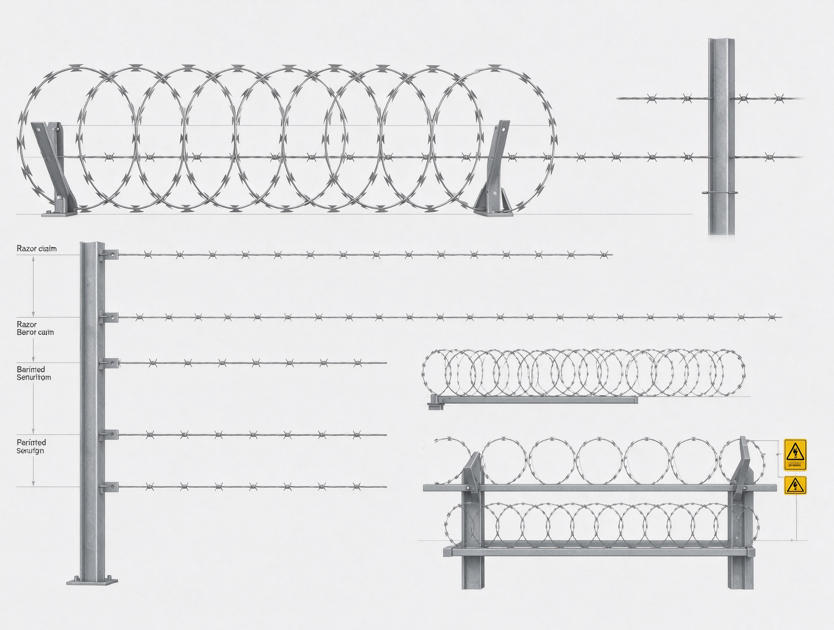
In many jurisdictions, anti-climb toppings must be installed high enough to reduce accidental contact. A commonly referenced minimum height is around 2.4 metres for certain anti-climb devices, especially near public areas.
Warning Signs Are Not Optional
Many regulations require clear signage where razor wire, spikes or barbed wire are used.In commercial and industrial projects, this is often the simplest way to demonstrate responsible installation.
Signs warn the public, reduce liability and show that the barrier is intentional rather than hidden.
Residential, Commercial and Industrial Differences
Residential areas usually have stricter limits than industrial sites. Warehouses, factories and high-security facilities may allow stronger perimeter solutions, but they still need to follow local codes.
In places such as California, Texas, the UK, Australia and Canada, rules can differ significantly depending on property type and public access.
Boundaries, Roads and Neighbour Risks
Fencing should not project over sidewalks, roads or neighbouring property. Installing dangerous toppings where people, children or animals could be injured can create serious liability.
Even when a product is technically allowed, its position on the boundary may determine whether it is acceptable.
Tell us your project type and country, and we can help recommend a suitable blade type, coil diameter and installation configuration.
2026-11-17
2026-11-16
Navigating Steel Volatility: A...
2026-11-11
Choosing the Right Concertina ...
2026-8-5